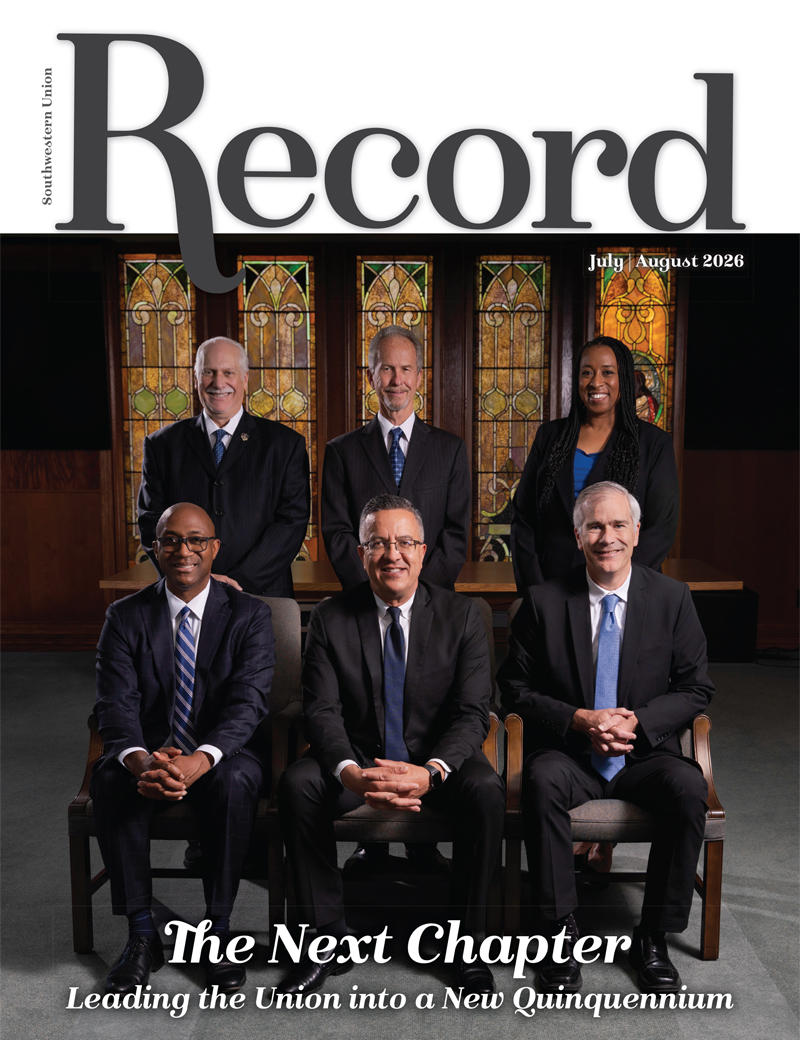
The Next Chapter
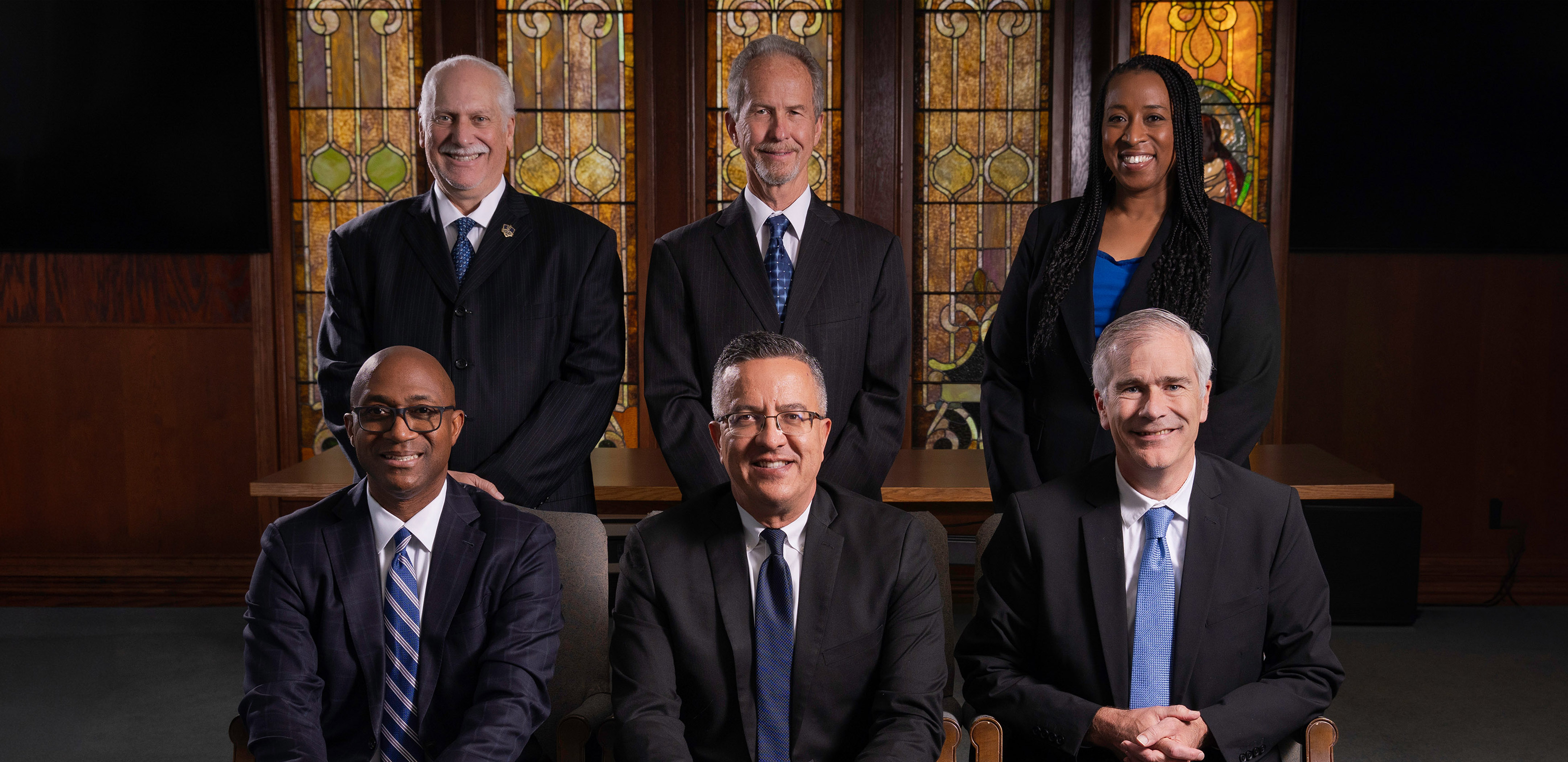
From Service Calls to a Higher Calling
By Lori Futcher
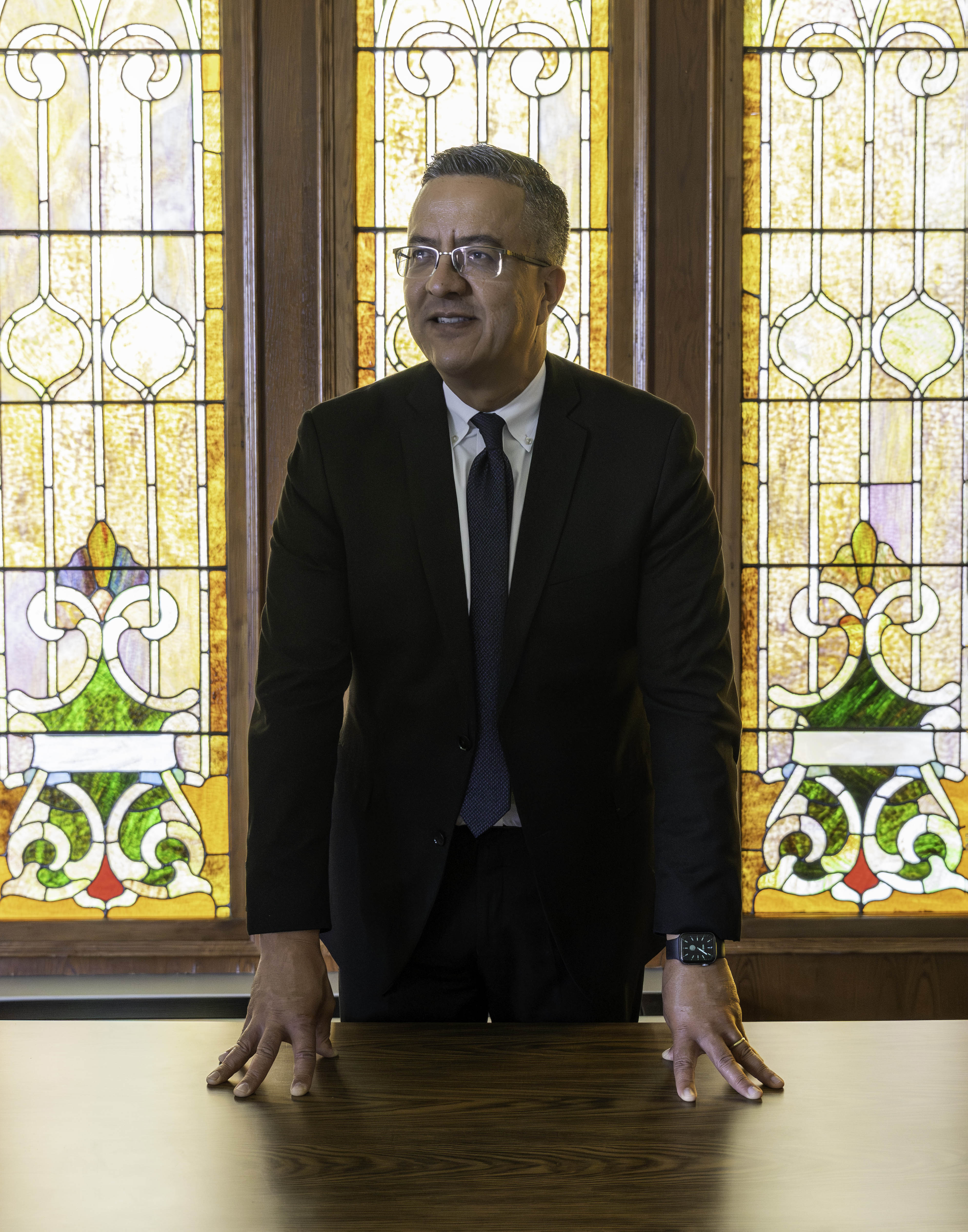
This is not about you.
These were the words impressed upon Elton DeMoraes’ mind as he stood in the foyer of the Keene Seventh-day Adventist Church, his legs feeling numb, his mind spinning as he tried to think of a response to the question North American Division President Alex Bryant had just asked.
“I think this will be a very easy session,” DeMoraes had told his wife, Alessandra, that morning. “I believe by 2 or 3 p.m. we’ll be done.” Together they planned a late lunch date and an afternoon of yardwork.
Instead, at 2:15 p.m., DeMoraes was being asked to make a life-changing decision. “Elder,” he said. “I need to process this. I don’t even know what to say.”
Bridge of Decision
Growing up in Brazil, church was always an important part of DeMoraes’ life. He sang in the choir, served as a youth elder and even preached. No wonder that by the age of 12 the boy who walked through the church doors at least four times a week felt called to ministry.
But his vision for the future changed when he began serving as an apprentice for Whirlpool at the age of 14. He discovered that he enjoyed making good money, and the calling he had felt started to fizzle.
By 17 he was working as a Whirlpool technician and trying to decide what direction college would take him. Should he be a pastor as he had dreamed about earlier or a lawyer to secure a good income?
Not old enough yet for a Brazilian driver’s license, DeMoraes was being transported from job to job by a driver. Crossing a bridge in São Paulo, DeMoraes looked out over a sea of vehicles. Cars, trucks and buses filled the city streets with sounds of honking. Everywhere, people were bustling about.
“I did not call you to make money,” he heard. “I called you to win souls. And look at the harvest. It’s ready, and I need you.”
“What did you say?” DeMoraes asked his driver.
“Oh, I didn’t say anything.”
Half crying, half laughing, DeMoraes directed his driver to take him back to the office.
“But we have a full list of calls…” his driver protested.
DeMoraes was insistent. Returning to the office, he walked in and resigned. The very next day he applied to the Adventist University Center of São Paulo.
Repair and Redemption
In 1994, when DeMoraes arrived at the university, which had been built on a former orange farm, the rural community that surrounded the campus didn’t have a technician to fix their appliances. DeMoraes became the local repairman, paying his way through college.
But his repair skills brought in more than just money.
During his junior year, while spending six months serving as a student Bible worker in conjunction with an evangelistic campaign, DeMoraes noticed a gentleman in his backyard trying to fix his washing machine. On previous occasions when DeMoraes had tried to approach the man, the gentleman had replied with “I’m busy” or “whatever.”
This time, when DeMoraes stopped, asking, “Having fun with that?” the man engaged in conversation.
“I’m trying,” the gentleman said, “but it’s giving me a hard time, and I don’t have the money to fix it.”
“Can I take a look?” DeMoraes asked.
Soon the two were working side by side. As they worked, they chatted, getting to know each other. The next day when DeMoraes came by, the man was waiting for him with an eager grin, announcing joyfully that the washing machine was working.
Five months later, DeMoraes baptized his new friend, a man who had previously refused to talk to him.
Seeds in Houston
That summer DeMoraes travelled to Houston to spend a couple months visiting his parents, who were now members of the Houston Central Spanish Seventh-day Adventist Church.
“Hey, we’re going to have an evangelistic campaign here,” the church pastor mentioned to DeMoraes. “Do you want to be our Bible worker for two months?”
“I don’t speak Spanish,” DeMoraes replied, assuming his limited language skills would unqualify him for the role.
The pastor shrugged. “Portuguese is close enough.”
The unexpected summer job put $2,000 into DeMoraes’ pocket, and, more importantly, helped bring 35 people to the baptismal tank.
Returning to the university for his senior year, DeMoraes felt confident he would receive a call after graduation. In addition to his Bible worker experience, he had spent eight school breaks working as a colporter. He had also been president of his class for three years and president of the student association his senior year. And his GPA was pretty impressive too.
Graduation came and went. DeMoraes got married and was ready to start the next chapter of his life. But no calls came.
Not knowing what else to do, he returned to his former job as a Whirlpool technician, all the while questioning why he had sensed such a strong call to the ministry.
One-Way Ticket
For half a year, it appeared as though DeMoraes wouldn’t receive the opportunity to serve in the ministry. But after word got out at his parents' church that he hadn’t succeeded in getting an appointment, he received an unexpected call to serve as that church’s associate pastor.
After his parents confirmed with the Texas Conference that DeMoraes’ call was legitimate, he and his wife sold nearly everything they had and travelled to the United States with two suitcases and $65.
Arriving at the conference office ready to onboard, DeMoraes was caught off-guard when the ministerial coordinator asked him for his work visa. No one had said anything to him about needing a work visa.
“I don’t have one,” he said. “You guys told me to come. I’m here.”
“No, no, you cannot get it here,” the coordinator informed him. “You need to have it. Otherwise we cannot hire you.”
“But I’m here.” DeMoraes wasn’t sure what to do. “I sold everything.”
“I’m sorry,” the coordinator said. “There’s nothing we can do.”
But the coordinator’s secretary, who was married to the conference treasurer, wasn’t going to give up as easily. She took DeMoraes to her husband’s office to discuss the situation with him.
Two weeks before DeMoraes’ visa expired, the conference decided to sponsor him.
He wouldn’t be able to work for about a year until his work visa was processed, but he could serve in a volunteer capacity, and the conference would take care of his basic needs, including covering a $6,000 hospital bill they incurred when his wife got sick.
Finding a New Voice
After working a couple years at the Houston Central Spanish Church, DeMoraes received a phone call from then-conference president Leighton Holley, speaking through a translator since DeMoraes didn’t know any English.
“I have a call for you," Holly said, "I want to send you to Houston Central.”
DeMoraes started laughing. “Well, I’m already at Houston Central,” he said.
“No, no,” Holley clarified. “I’m sending you to Houston Central English.
Now the translator was laughing.
“This is a joke, right?” DeMoraes asked, reminding Holley that he didn’t speak English.
“Do you accept it?” Holley asked.
“Wow,” DeMoraes uttered his shock before verbalizing his agreement to the transition.
For his first meeting at the new church, DeMoraes sat for three hours not understanding a word that was said until the final words of the closing prayer: “In Jesus’ name, Amen.”
Lord, what am I doing here? DeMoraes inquired. Why are you moving me here?
DeMoraes and his wife enrolled in English classes, where for nine months they attended four nights a week from 6-11:30 p.m.
When not in school or doing ministry, they watched sitcoms or American football to help immerse themselves in the English language and American culture.
One day, as they were driving and listening to an English radio station, they suddenly felt as though their ears had opened.
“I understand this!” DeMoraes said.
“Yeah, me too!” Alessandra observed.
For his first four sermons at the English church, DeMoraes used a translator, but by his fifth time at the pulpit, he was ready to try a memorized English sermon. “I don’t think I remembered what I was saying,” DeMoraes recalls, “But I memorized it word for word.”
DeMoraes could have said no to the call to an English church. He could have saved himself the hours upon hours of memorizing English sentences and the frustration of sitting in meetings that made no sense to him.
“But I felt I needed to do this,” he says. “I felt the Lord guiding this way, and, because of that, doors opened for me tremendously.”
Southwestern Steward
For a quarter of a century, DeMoraes ministered in the Southwestern Union. He pastored at several Texas churches before becoming a department leader and then later executive secretary at the Texas Conference and then vice president for ministries at the Southwestern Union. Five years ago, he was elected president of the Texas Conference.
Then in April, as he stood in the Keene church foyer allowing Bryant’s invitation to sink in, DeMoraes started thinking about the team he had built at the Texas Conference. “We work through collaboration,” he says. “There’s a lot of synergy. And I’m thinking about my team, thinking about all the things we want to accomplish and the vision we put in place.”
But in that moment, he paused long enough to hear God’s voice: This is not about you. There is more work for us to do on a different level.
And so he agreed to lead the union through the next quinquennium.
“At the end of the day, the way I see it is that we’re just stewards,” says DeMoraes. “We are stewards of the calling He has given us, and we want to do it in the most faithful way possible.”
Advocating for Adventist Education: Kisha Norris
When Kisha Norris stepped into the Keene Seventh-day Adventist Church as a delegate for the 32nd Constituency Session of the Southwestern Union, she had no idea that before leaving, she’d have a new job title. But by the end of the session, Norris had been elected as the union’s new vice president for education.
“This was not on my radar,” Norris said. “I did not pursue this role, but I am both humbled and honored by the confidence placed in me, and I recognize the responsibility that comes with serving in this position.”
Growing up, Norris didn’t see herself entering the education field at all. As the daughter of a deeply devoted Adventist educator, Norris watched her single mother wake up early to drive students to school, pack extra lunches and tutor children after class. She wanted nothing to do with the kind of sacrifices so many Adventist educators make. But after struggling through a college class taught by a brilliant professor whom she could not understand, then retaking the same class with a teacher who explained concepts clearly, Norris realized she wanted to become the kind of educator who helped every student succeed.
Norris began her career teaching at Burton Adventist Academy in Arlington, Tex. Most recently, she’s been serving as the vice president for education at the Texas Conference.
In her position with the Texas Conference, she was looking for ways she could support educational leaders throughout the union. “What can I do to help you guys?” she would ask her fellow superintendents whenever they gathered for meetings.
Not only does she see the importance of collaborating with educators, but she understands the value of working with pastors and other church leaders. “Adventist education does not work in a silo,” she explained.
As she steps into the role, Norris hopes to build strong partnerships across the union while advocating for Adventist education at every level. She wants the education office to be visible and engaged: celebrating schools, supporting educators and helping church members see Adventist education as a vital part of the church’s mission.
“We in the Southwestern Union have a valuable resource in Adventist education,” Norris said. “And the only way it continues and grows and becomes a center of influence is if we take care of it, if we advocate for it, if we support it.”
Looking Forward
Here’s what returning members of Southwestern Union’s leadership team are planning for the next quinquennium.
Stephen Brooks
Stephen Brooks, Southwestern Union executive secretary, is working with the local conferences to provide additional support for church clerks as they help churches maintain accurate membership records and reclaim inactive members. This support includes an upcoming clerk convention and piloting an “area clerk” initiative in the Arkansas-Louisiana Conference. In this initiative, experienced clerks will mentor church clerks within a designated region.
Brooks also plans to support local conferences in training and deploying more Bible workers to assist local churches and conferences. The union plans to expand training opportunities through a Bible worker retreat.
In addition, Brooks plans to expand the union’s public affairs and religious liberty (PARL) work by strengthening relationships with community leaders and elected officials in state capitals across the Southwestern Union territory.
John Page
Treasurer John Page’s vision for the next quinquennium is to ensure that the union’s entities have the resources needed to provide strong financial reporting and support sound decision-making. “I think we have a great future ahead of us,” Page said.
Page also emphasized the importance of stewardship education in supporting the church’s mission. “I think that we should continue to teach our members about giving and about how funding works within the church,” he said.
Page says he feels confident about the future and the union’s ability to support conferences, churches and schools throughout the territory.
Tony Anobile
Tony Anobile, now serving as vice president for ministerial and multicultural ministries, will continue his work in ministerial leadership while also helping conferences navigate our growing cultural diversity.
A certified cultural intelligence trainer, Anobile has served as the North American Division vice president for multilingual ministries. He believes the Church must learn to recognize and value the diverse cultures and perspectives that shape its congregations while adapting to changing demographics and ministry needs. “I’m looking forward to helping conferences understand the importance of cultural diversity,” Anobile said.
Along with his new multicultural ministries responsibilities, Anobile will continue supporting conferences, pastors and ministry leaders throughout the union. He is looking ahead to the next union-wide ministerial convention in 2029.
Bo Just
Bo Just, Southwestern Union undertreasurer, hopes to strengthen long-term financial support for ministry and education through continued growth of the union’s educational endowment fund and stronger trust services ministries.
A previous goal of reaching $5 million in the educational endowment fund has already been surpassed, with the fund now approaching $8 million. Just said he would like to see that number grow to $10 million. Distributions from the educational endowment will total $354,027 for the 2026-2027 school year. “The more that we can provide,” Just said, “the more students can get Christian education.”
Just hopes to increase awareness of planned giving opportunities available to church members. “The potential for gifts are still out there,” he said.
Departmental Directors
During a specially convened Southwestern Union Executive Committee meeting held on June 4, the following department directors were reelected, with some being assigned new leadership responsibilities.
Children’s Ministries and Church Ministries Director
Sonia Canó
Women’s Ministries Director
Letty Craig
Director of Secondary Education
Mike Furr
Young Adult and Youth Ministries, Men’s Ministries and Stewardship Director
Helvis Moody
Communication Director
Gerson Pancorbo